Portfolio Review Checklist
Before we begin preaching about the significance of portfolio review, we have a story to tell. A girl once adopted a cat; she bathed her, fed her, bought her toys, took care of her, and did almost everything possible; she even installed cat-proof fencing. Thinking she had taken all the precautions, she stopped checking on her frequently. One day, she forgot to close the door, and the cat ran away—the girl was left with nothing but regret.
Now, we know you must be wondering why we are telling you a cat story when we should be talking about the portfolio review checklist. But readers, if you look at it closely, you will realise that just like adopting a cat and taking care of her isn’t enough, investing in the right financial instruments without reviewing your portfolio isn’t enough either.
Puzzled? Well, worry not. Read this blog till the end, and we will simplify the concept of portfolio review checklist for you.
What is a Portfolio Review?
Simply put, a portfolio review is the process of assessing your existing investments to check whether they align with your financial goals, risk tolerance, and time horizon. For instance, imagine you initially invested 60% in equity, 30% in debt, and 10% in gold. Now, after a few years of strong stock market performance, your equity allocation might increase significantly. So, a portfolio review helps you stay informed about such changes. This way, you can understand whether your current portfolio aligns with your financial goals.
Moreover, a regular portfolio review helps you track your investment performance, identify potential risks, maintain diversification, control investment costs, and make better investment decisions.
Ideal Time to Review Your Portfolio
You will kill the plant if you water it more than required. Similarly, reviewing your portfolio almost all the time will wreck your mental health, and you might make financial decisions which aren’t even needed. So, the question is: when should you review your portfolio? Well, it ain’t that difficult; an annual portfolio review is enough—it will help you evaluate your gains, losses, and tax obligations. However, some financial developments may require additional care.
Therefore, you must consider reviewing your portfolio when:
- Your salary increases, you receive a bonus, get an inheritance, or attain any substantial amount.
- Your income or monthly expenses change substantially.
- You come up with a new financial goal.
- Your investment horizon or risk appetite changes significantly.
- A mutual fund changes its investment strategy or fund manager.
- Your portfolio’s asset allocation changes and it no longer aligns with your existing financial goals.
To sum up: reviewing your portfolio every day isn’t necessary. If we were to be very frank, it will mess with your peace. Nevertheless, an annual portfolio review will give you a pretty good idea about where you stand in your investment journey.
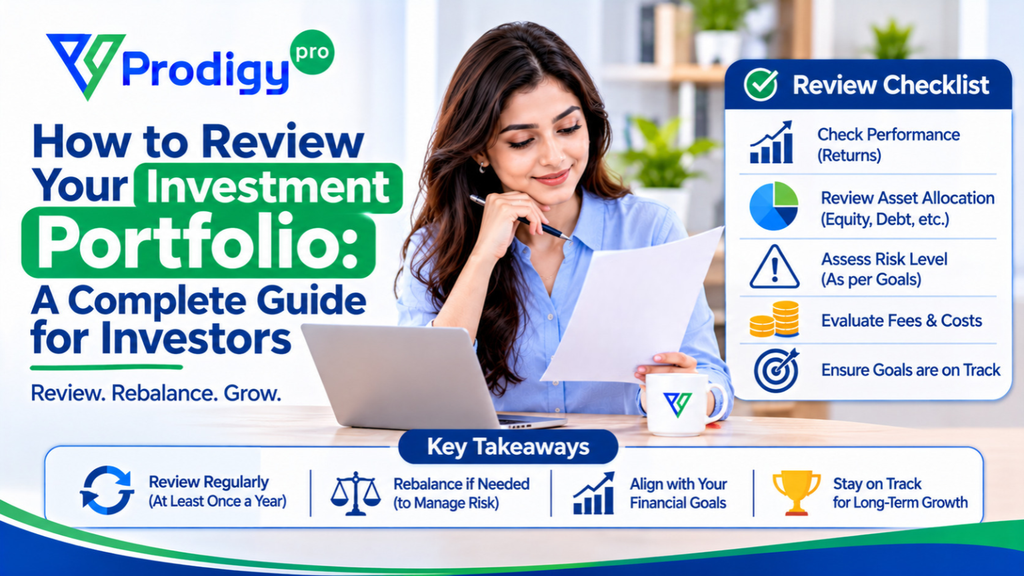
Things to Check During a Portfolio Review
Enough with the importance of a portfolio review; let’s take a look at the things you should check whenever you review your portfolio:
- Revisit Your Financial Goals: Keep your financial goals in mind whenever you sit to review your portfolio. The logic is simple: each goal has a distinct investment horizon, and to attain those goals, staying in the market till the required time is crucial. For instance, if you need money within the next two years, you must invest in a relatively stable fund. However, if your sole aim is to build a lavish corpus within some 20-30 years, you should opt for growth-oriented funds. In the end, it depends on your financial goals and risk appetite.
- Evaluate Asset Allocation: Asset allocation simply means how you have allocated your funds across different asset classes, such as equity, debt, and other financial instruments. A well-planned asset allocation can help you balance returns and risks. However, market movements have the potential to change your portfolio’s original allocation. Therefore, always compare your existing asset allocation with your investment plan; consider rebalancing your portfolio if there’s a substantial deviation.
- Review Investment Cost & Tax Implications: Always check the expense ratio in mutual fund investments, as it represents the annual cost of managing the fund. Plus, take a look at the exit load before you decide to redeem your funds. Moreover, understand both long-term capital gains tax and short-term capital gains tax, as they will greatly influence your final returns.
- Rebalance Your Investment Portfolio: Rebalancing your portfolio typically means adjusting your investments to bring your asset allocation back to its intended levels. It helps your portfolio maintain the desired risk exposure and prevents it from relying solely on a particular asset class.
Once you have evaluated all the aspects of your portfolio, make reasonable decisions, such as continuing the investments that align with your goals and risk tolerance, monitoring the investments that demand significant attention, adjusting your portfolio to maintain the target asset mix, and checking whether your investment strategy needs a change.
Mistakes to Avoid During a Portfolio Review
- Investing in funds that have performed well in the recent times can lead to poor investment decisions.
- Holding several mutual funds without checking their underlying holdings can create unnecessary concentration.
- Frequently buying and selling investments may lead to transaction costs and tax liabilities.
- Your portfolio must align with your financial goals because a well-performing investment may still be unsuitable for your specific financial goal.
- Don’t ever overlook your risk tolerance. Your portfolio should reflect the level of risk you can digest.
On a Parting Note
Reviewing your portfolio is crucial for managing your investments and maintaining a disciplined financial strategy. It helps you assess the overall performance, identify potential risks, manage investment costs, and ensure that your investments align with your financial goals.
Although reviewing your portfolio every day isn’t crucial, doing it annually can save you from a major financial loss.
Please share your thoughts on this post by leaving a reply in the comments section. Contact us via phone, WhatsApp, or email to learn more about mutual funds, or visit our website, Prodigy Pro. Alternatively, you can download the Prodigy Pro app to start investing today!
FAQs
1. How often should I review my investment portfolio?
Ideally, you should review your investment portfolio every six months or at least once a year.
2. Does reviewing my portfolio mean I have to sell underperforming investments?
No. An underperforming investment does not necessarily need to be sold immediately. Evaluate its performance against relevant benchmarks, investment objectives, and peers before making a decision.
3. What should I check during a mutual fund portfolio review?
During a mutual fund portfolio review, examine fund performance, asset allocation, portfolio overlap, expense ratios, risk exposure, fund management changes, and consistency against relevant benchmarks.
4. Can I review my investment portfolio myself?
Yes. You can review your portfolio using investment statements, mutual fund factsheets, and portfolio tracking tools.
5. What are the warning signs that my investment portfolio needs a review?
Some common warning signs include excessive exposure to one asset class, repeated underperformance against relevant benchmarks, overlapping mutual fund holdings, changing financial goals, an increase in investment costs, and a mismatch between your portfolio’s risk and your risk tolerance.