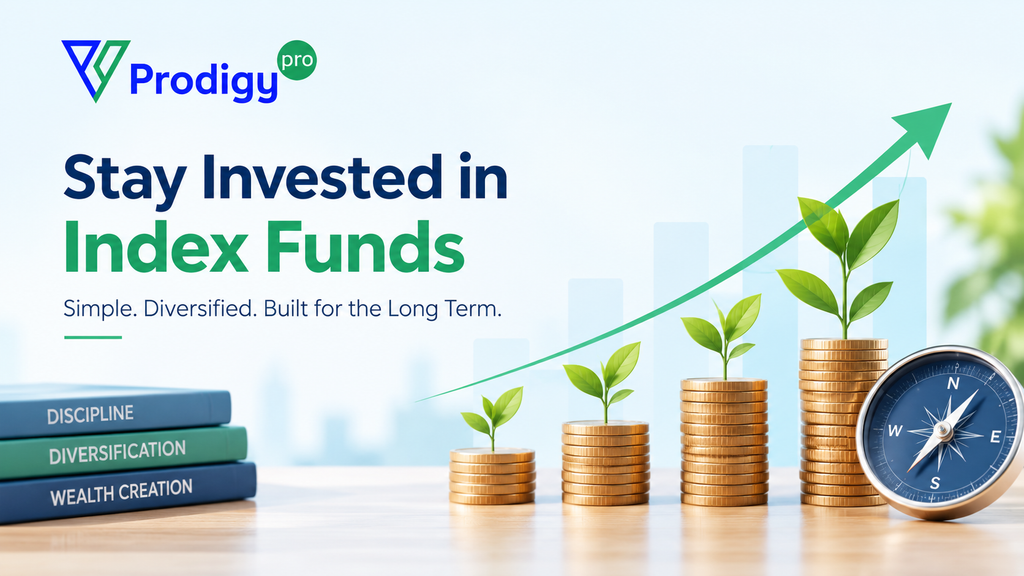
Index funds are very popular since they offer a low-cost investment vehicle to gain market exposure and diversify your investments for the purpose of building wealth over the long-term. However, one of the most commonly asked questions from novice investors is, how long should you stay invested in index funds? Let’s take a look at how long to invest in index funds while also looking at the ideal timeframes, strategies, and planning tips to get positive returns with your index fund investments.
Ideal Investment Duration for Index Funds
How long you stay invested matters as much as what you invest in. Index funds simply track the market, say the Nifty 50, so they don’t try to beat it. They grow as the market grows, and that growth takes time.
Over a year or two, returns can swing widely. A good year can be followed by a bad one, and anyone who needs the money in that window may have to sell at the wrong time. But the longer you stay, the more compounding works in your favour. Your returns start earning their own returns, and a single bad year matters less in the bigger picture.
That’s why index funds suit people with a long horizon: retirement, a child’s education, or financial independence. If you can leave the money alone for 10 years or more, you give the market room to recover from dips and give compounding room to build. Short on time? Equity index funds may not be the right fit for that goal.
Ideal Holding Period for Index Fund Investing
The best time to hold index funds is generally 10 years or longer. The data indicates that equity markets typically average-out short-term cycles and perform well over the long term. When you hold your investment at least 10 years you will be able to withstand the downturns of the market, and benefit from compounding.
Index Fund Performance Timeline
Grasping the index fund performance timeline is instrumental in creating practical expectations. Normally:
- 1–3 years: Extremely volatile; returns may differ immensely.
- 5–7 years: Stabilizing; early compounding indicators.
- 10–20 years: Healthy positive returns with reduced volatility.
This time frame drives home the need for patient long-term investment.
Long-Term Index Fund Investment Strategy
A good long-term index fund strategy is to invest regularly (in SIPs or lump sums), and avoid the urge to withdraw during market downturns. Being steady and patient will help you build your portfolio slowly but surely.
Long-Term Investing in Index Funds
Index fund long-term investing is the most surefire means to create wealth without attempting to time the market. Being a holder of a steady stake over several decades may be able to capitalize on the potential for growth by the market, inflation-exceeding gains, and decreasing aggregate risks.
Index Fund Investment Planning
Accurate index fund investment planning includes:
- Identifying your financial objectives.
- Selecting the appropriate index fund (domestic or overseas).
- Scheduling your investment (lump sum or SIP).
- Being disciplined in following a long-term plan without responding emotionally to market’s ups and downs.
Index Fund Investment Strategy
An intelligent, index fund investment strategy employs diversification, regular/consistent investing, periodic portfolio review (not active trading) and long-term mindset instead of short-term noise.
Index Fund Risk and Duration
Short-term investing puts you at greater risks from market fluctuations. The more time your investment stays, the greater the risks balance out, thus long-term investment is safer and more lucrative.
Advantages and Guidelines of Index Fund Investing
Below are some crucial index fund investment tips:
- Invest early for maximum compounding.
- Maintain your investments through market highs and lows.
- Steer clear of buying and selling frequently on a whim.
- Emphasize low-cost index funds to optimize net returns.
Index Fund Holding Period Advantages
- Short-term market swings matter less the longer you stay invested.
- Compounding gets more time to work, which improves your potential for returns.
- Long-term gains are taxed at lower rates under LTCG rules.
- Your dividends and your capital can keep growing together.
Index Fund Investment Guidelines
Adopt these fundamental index fund investment guidelines:
- Select funds with low expense ratios.
- Invest regularly irrespective of market conditions.
- Check your investments every year but do not switch frequently.
- Stay calm and have faith in the process.
Index Fund Long-Term Advantages
The long-term advantages of index funds are considerable. They provide:
- Consistent, inflation-trumping returns.
- Low management fees.
- Diversification of asset classes across different sectors and industries.
- A much more user-friendly investment than an actively managed fund.
Also, Check – What is Perpetual SIP in Mutual Funds
Final Thoughts
In conclusion, the answer to the question of “how long do you have to have your funds invested in an index fund?” is quite simple: as long as you can. Ideally, over 10 years. The longer your horizon, the more opportunities you have for respectable, consistent returns. Remember, successful investing isn’t about timing the market, it’s about time in the market.
Please share your thoughts on this post by leaving a reply in the comments section. Contact us via phone, WhatsApp, or email to learn more about mutual funds, or visit our website, Prodigy Pro. Alternatively, you can download the Prodigy Pro app to start investing today!
Can 10 years be the index fund investment?
Yes, 10 years may be a most suitable minimum period of holding for ensuring maximum return and minimizing risks in the market.
How risky are index funds over the long run?
In the long run, index funds are comparatively less risky than short-term investments due to market appreciation and compounding.
What is the optimal index fund investment strategy?
Invest regularly, remain invested for the long term, reinvest dividends, and do not make emotional decisions during market downturns.
Do I take money out of index funds in a market crash?
No. Remaining invested during market declines allows you to ride out the eventual market rebound.
Disclaimer: This article is for educational purposes only and does not intend to substitute expert guidance. Mutual fund investments are subject to market risks. Please read the scheme-related document carefully before investing.