OVERVIEW:
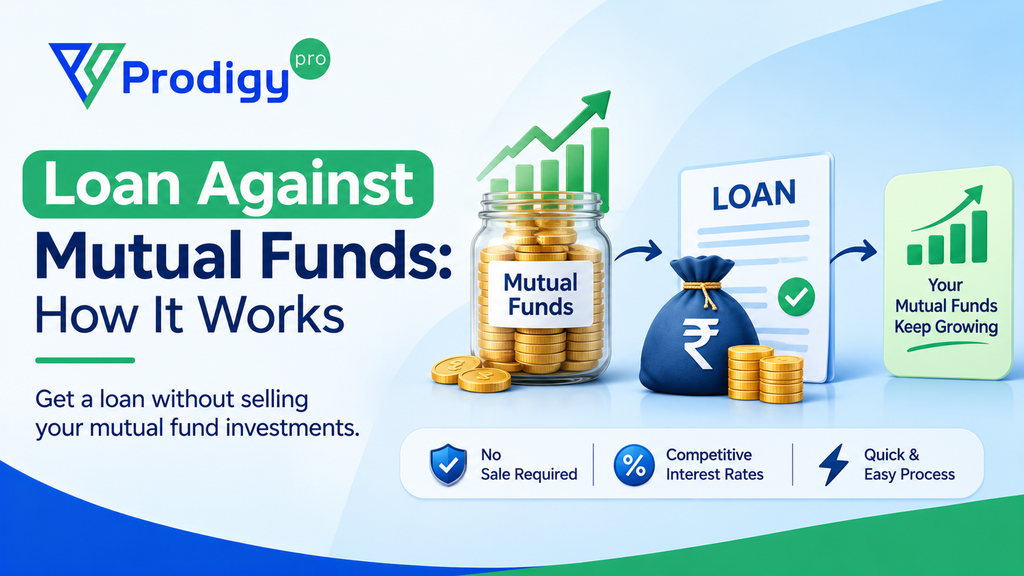
A loan against mutual funds (LAMF) lets you pledge your units with a bank or NBFC and borrow against their value. Your investments stay invested, you skip the immediate tax on redemption, and interest is usually lower than a personal loan. The catch: pledged units are frozen, a market fall can trigger a margin call, and missed repayments can mean your units get sold. Used smartly, LAMF is a bridge for short-term needs. Used casually, it’s a trap. Here are the questions everyone asks first.
INTRODUCTION
A truth hard to swallow—life is uncertain.
What’s more dangerous is that people have accepted this truth, yet do nothing about it. Because “Jo hoga dekha jayega” is apparently the new trend. But readers, tell us: what will you do when you fall short on money, and unexpected financial crises choose to knock on your door? Give up on your FD, sell your gold, or redeem your mutual fund returns, right?
But what if we tell you there’s another way out? Meaning, you can access your funds without disturbing your portfolio or redeeming your mutual fund units? Yes! You can take a loan against your mutual funds, fulfil your financial needs, and repay it according to the required terms and conditions, without any hassle.
A lot to handle? Sit tight; in this blog, we will explain everything from scratch, so you don’t have to worry about giving away your years of hard-earned money in the blink of an eye.
A Look Into Loan Against Mutual Funds (LAMF)
If we were to give you the basic, school-like definition, it would be: LAMF falls under the broader category of Loans Against Securities. This includes loans against shares, bonds, and other legitimate financial assets.
The idea is very simple—offer a secured loan facility for investors when they need it. LAMF (Loan Against Mutual Funds) allows investors to borrow money from Non-Banking Financial Companies by pledging their mutual fund units as collateral. Basically, you won’t have to redeem your mutual fund investments; you can use their value to obtain a loan.
Take it this way: imagine you have mutual fund investments worth Rs 20 lakh and urgently need Rs 5 lakh; in this case, instead of redeeming your funds, you can pledge eligible mutual fund units and get the required amount against them.
This will save you from the trouble of stepping out of the market and let your investments continue to participate in potential market gains or losses. But…But… There’s a catch: you cannot redeem, switch, or transfer the pledged units until you repay the loan amount.
Process of Loan Against Mutual Funds (LAMF)
- Select Eligible Mutual Funds: Multiple banks and NBFCs have their own list of eligible mutual funds, so your first task will be to check whether the lender accepts your mutual fund schemes or not.
- Submit a Loan Application: Once you’re done with that, apply for a loan with the selected lender and provide the required details.
- Pledge Your Mutual Fund Units: The moment your loan application is reviewed, you authorise the lender to mark your eligible mutual fund units as security against the loan. The process is typically completed through an OTP based authentication, involving the fund’s Registrar and Transfer Agent.
- Loan Approval & Disbursement: The lender assesses your investments, checks for the eligible loan amount, and sanctions the funds.
- Repayment: The repayment of the loan is done according to the agreed repayment terms.
- Release of Pledged Units: Once you repay the entire amount, the lender removes the lien, allowing you to access your funds again.
How Much Can You Borrow?
We know you must be wondering if there’s any limit to the amount you can borrow against the market value of your pledged mutual fund units. Well, it’s determined by the Loan-to-Value ratio.
Simply put: A loan-to-value ratio gives you an idea of the percentage of your investment value that a lender is willing to lend.
For instance, if your eligible mutual fund investments are worth Rs 5 lakh and the lender offers an LTV ratio of 70%, you may receive a loan limit of Rs 3.5 lakh.
This loan-to-value ratio typically depends on the market volatility, the lender’s policy, and the type of mutual funds you pledge.
Benefits of Loan Against Mutual Funds
- Access funds without disturbing your investments: The best part about taking loans against mutual funds is that you don’t have to redeem your investments. Your investments participate in the market’s potential long-term growth. However, it’s a truth universally acknowledged that an investment is subject to the market’s ups and downs. This means your pledged investments can also decline in value.
- No Immediate Capital Gains Tax: Capital gains tax is only triggered when you redeem your funds. So, when you take a loan against your mutual funds, you avoid paying taxes. A win-win situation for people who have accumulated substantial gains and wish to avoid taxes.
- Low Interest Rates: The interest rates on LAMF are typically lower than the ones you take from unsecured personal loans because LAMF is backed by your mutual fund investments. Nevertheless, you must compare the complete borrowing costs, including the processing fees and other charges.
- Flexible Repayment Options: Some lenders offer loan against mutual funds through an overdraft facility, meaning borrowers are allowed to withdraw money whenever required, up to their sanctioned credit limit. Other lenders provide interest-only repayment options, with the principal repayable at the end of the loan tenure.
Risks of Loan Against Mutual Funds
Everything has its pros and cons; although LAMF offers several benefits, it has certain risks as well that borrowers must be well-versed in.
- Market Fluctuations: “Mutual funds are subject to market risks,” a line we have read and heard almost everywhere. So, if the value of your pledged investments falls due to the market’s ups and downs, your loan may exceed the permitted LTV ratio.
- Margin Calls: The lender may ask you to repay a portion of your loan or pledge additional units if your collateral value falls below the required level.
- Restricted Access to Investments: Once you have opted for LAMF, you cannot switch, redeem, or use your investments for a Systematic Withdrawal Plan or Systematic Transfer Plan until the lien is released.
- Change in Interest Rates: Some LAMF facilities have floating interest rates. In this case, your borrowing cost may increase if the lender raises the benchmark rate.
Eligibility Criteria For LAMF
Although the eligibility criteria may vary across banks and NBFCs, we are alluding to some basics:
- Be an Indian resident, and you must meet the lender’s minimum age requirement.
- Hold eligible mutual fund units.
- Your mutual fund units must not already be pledged or subject to restrictions.
- Complete the lender’s KYC and verification process without delay.
- Meet the lender’s minimum investment value and loan amount criteria.
Note: Not all mutual fund schemes qualify for LAMF. For instance, Equity Linked Savings Scheme (ELSS) or other mutual funds under a lock-in period cannot be pledged during the lock-in period.
On a Parting Note
Now that we have reached the end of the article, we just want to say that you can use your mutual fund investments as collateral when you need urgent funds, but does that mean you should do it often? Well, no! A loan against mutual funds should never be used as a substitute for proper financial planning.
Manage your finances efficiently, so you don’t feel the need to rely on loans. Happy Investing!